Spoiler alert! If you haven’t seen Wicked: For Good yet, click away! This is part 2 of a three-part series; here, we will focus on fall guys.
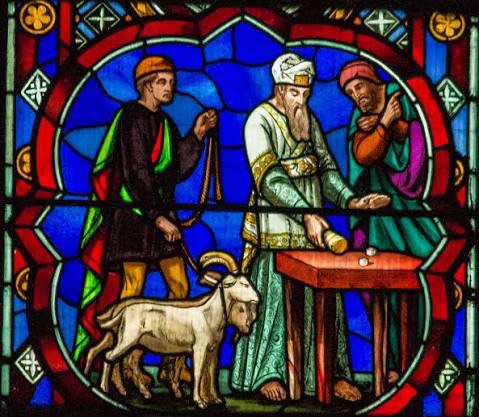
Fall guys, or scapegoats as they may be better known, are consistently seen throughout literature and history. In order to divert blame away from true perpetrators, usually people in positions of power or entire corrupt systems, scapegoats are generally different or vulnerable in some way. From Oedipus Rex absorbing the guilt of the entire city of Thebes, to the six million Jewish people murdered during the Holocaust in Nazi Germany, to the general cry of ‘immigrants’ we hear in Western politics today, it seems that scapegoating and blame-shifting has always been a part of the human experience. We are often loathe to face our own sins, and, as a result, are prone to scrabbling around desperately for someone else to blame. With taking accountability comes distinct discomfort, after all.
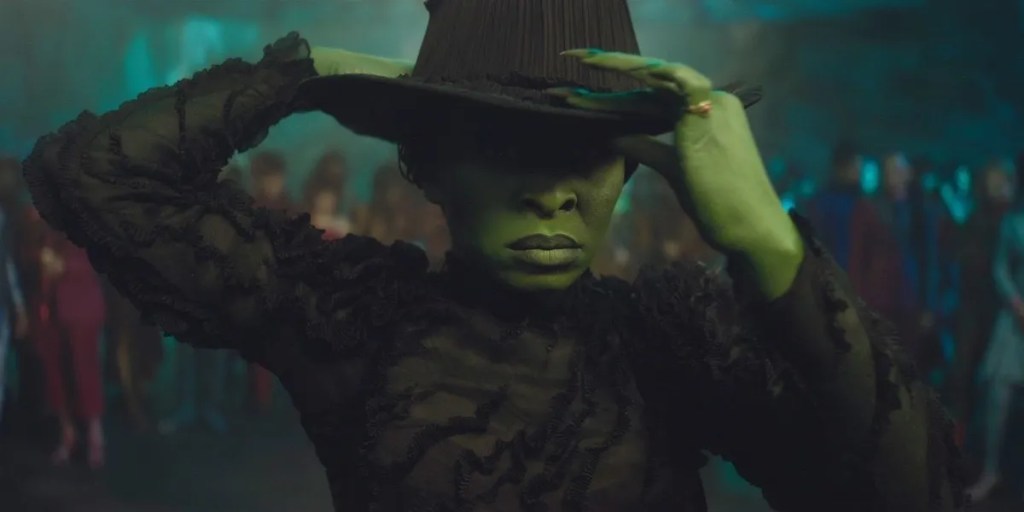
From the moment we meet Elphaba in Wicked Part 1, we are acutely aware of the fact she is different – green-skinned and magically gifted. Instantly, her father rejects her. She continues to be othered by everyone she encounters apart than Dulcibear, her nanny. Despite this, she is unfailingly kind to her sister and clings to the hope that one day she will make it to the Emerald City – where everything is green – and meet the wizard. Then, despite being the most powerful and talented witch at Shiz, she is still an outcast because of her green skin, and is only welcomed into the fold because Glinda – social royalty – eventually invites her in.
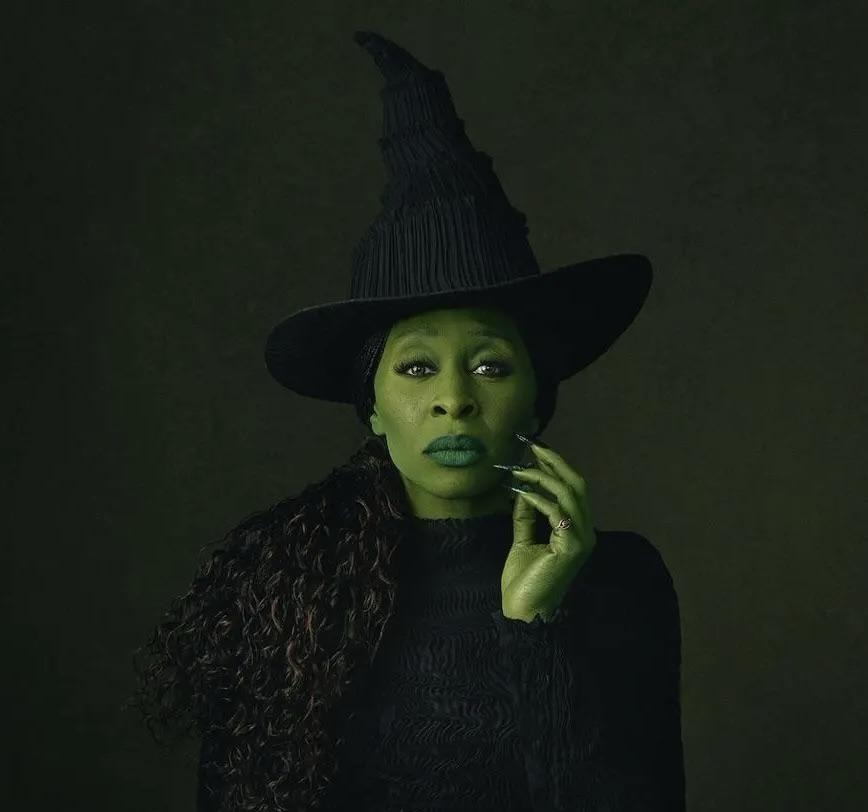
This difference and social isolation sets Elphaba up for becoming Oz’s Wicked Witch of the West. The Wizard and Madame Morrible are extremely quick off the mark when Elphaba refuses to prop up their fascist regime and instead threatens to expose them for their cruelty towards the animals. Madame Morrible references her green skin in her ‘wicked witch on the loose’ announcement to Oz at the end of Wicked Part 1 – it’s so very easy to drum up fear and loathing for somebody who doesn’t fit in. Had it been Glinda on the recieving end, I’m not sure the hate campagin would have been anywhere near as effective. Besides, Glinda didn’t have the thing that truly made Elphaba different from most people – her unshakeable dedication to truth and moral justice. As the Wizard glibly points out in his song Wonderful:
“It’s all in which label is able to persist.
There are precious few at ease
With moral ambiguities
So we act as though they don’t exist.”
He’s spot on; the label of ‘Wicked Witch’ will persist forever, simply because she refuses to pretend that mistreating and banishing the animals is ok. As far as the human Ozians are concerned, humans good, animals bad. Black and white, easy to swallow, no moral ambiguity to speak of. Same with Elphaba – she will forever be blamed whilst the Wizard is lauded. There is a moment early in the film where Elphaba stands in her secret cave, after she sees Fiyero and thinks he has turned on her too, and she just looks so burdened, so profoundly alone. Cynthia Erivo captures this moment of vulnerability so beautifully. Such is the lot of the scapegoat – isolation is part and parcel of the experience. It is also said, though, that if you want to know who the bully is and who the victim is, look at who is surrounded by enablers and sycophants, and who stands alone. Bullying and scapegoating truly is a group sport.
Despite her relentless strength and determination, we do start to see Elphaba begin to blame and even loathe herself as the mistreatment goes on. The song No Good Deed perfectly represents her anguish; she is overcome with guilt about Fiyero’s fate, and Nessa’s, and even Dr Dillamond, all of whom are referenced in the song. As the audience, we can clearly see that none of these ‘disasters’, as she calls them, are her fault at all. Dr Dillamond is a victim of the Wizard’s oppressive, fascist regime. Nessa is like her father – cruel, vindictive and cowardly,
despite Elphaba’s kindness – and is her own worst enemy. And Fiyero chose to join her, to confess his love and to sacrifice his own safety for her cause. But everybody has a breaking point, and ultimately all a scapegoat can really do (unless there is huge social change) is remove themselves from the situation, protect their own safety, and be amongst less hateful, bigoted people.
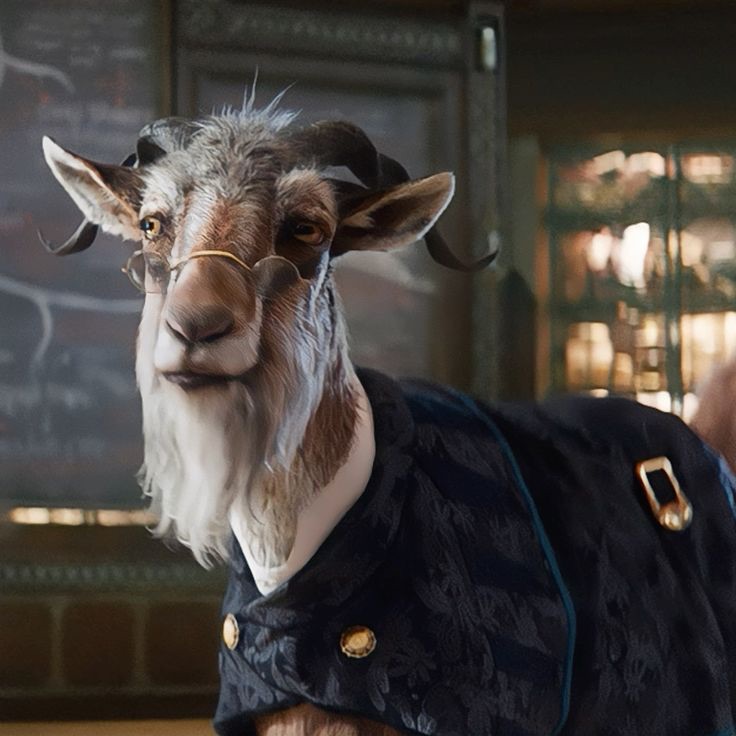
The animals, of course, are Oz’s primary scapegoat, and Elphaba merely a symbol of the wickedness they have been accused of in her rebellion against the Wizard. It is a hard look at the historical persecution of minority groups; the animals quite literally are silenced, and struggle more and more to speak. The animals are an entire, complete community, much like the human minorities in our world that they share their experience with. They contribute positively to Oz – Dr Dillamond is a teacher, and Dulcibear a nanny, for example. Elphaba, as a ‘child of both worlds’, doesn’t really have a community of her own. This dual heritage forces her to forge her own identity, and the constant othering she experiences makes it easier for her to identify with the heavily persecuted animals. Her empathy comes from lived experience. The people of Oz, however, happy in their privilege, are willing to shut their eyes and believe in the fairy tale of the Wicked Witch. I can’t help but relate this to the ongoing genocide Israel has enacted in Gaza, and the actions of the UK government in proscribing Palaestine Action as a terrorist organisation. Of course, the target of sanctions and consequences should be Israel, but instead, the UK government has pointed a cowardly, self-serving finger at the activists trying to reveal the horrible truth.
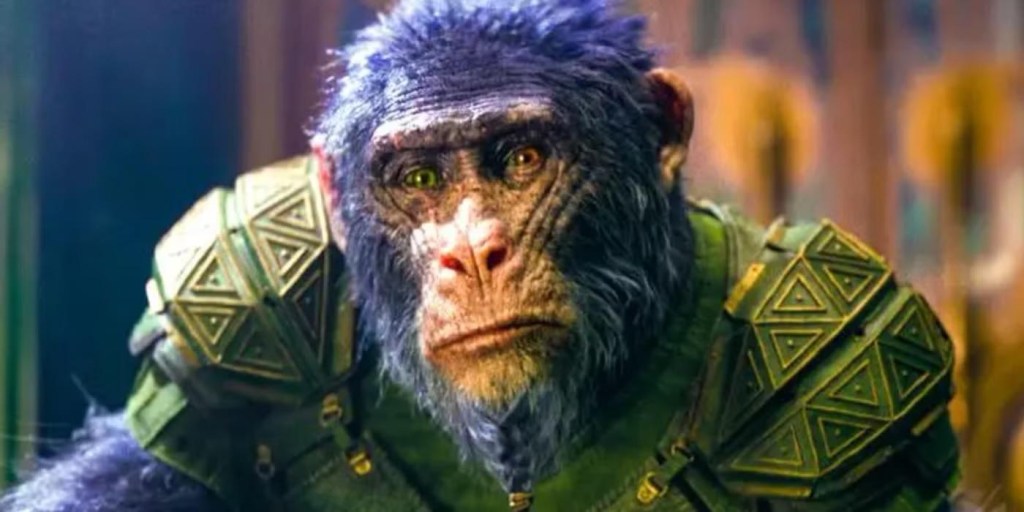
It has to be acknowledged, too, that the flying monkeys stand out in terms of the animal community because they actually work against the other animals as spies for the Wizard, after being mutilated by him using Elphaba’s magic. But they, too, are merely instruments at the mercy of the Wizard; they are slaves, unable to speak and unable to escape. This mirrors the terrible plight of many Jews during the Holocaust, forced to work for the Nazis until it ultimately killed them, or contributed to the death of others. The life of the flying monkeys, trapped in their cage in their Emerald City uniforms, sent to cause harm to those in their own community in oppressive silence, is truly harrowing.
There is an obvious parallel, too, to the experience animals have in our own world. Factory farming, brutal methods of slaughter and life on the meat conveyor belt make for a life of terrible suffering for most animals raised for food. Again, this happens behind very closed doors; it’s illegal for a member of the public to film inside slaughterhouses and abattoirs, and despite the fact that CCTV has been mandatory since 2018, the public cannot access this footage. Unimaginable suffering happens in these places, yet, as the Wizard points out, ‘we act as if they don’t exist’. In the UK this December, ten million young turkeys will be slaughtered for food, and 2 million of their bodies will ultimately be thrown away. Most Christmas turkeys, far from being ‘free-range’, live their entire life in a windowless shed.
It’s so important to see stories like this on our screens right now. In the climate we’re in, where governments can blatantly commit genocide and other war crimes and be protected by all their rich, powerful friends in other governments, where the gap between rich and poor widens all the time, where real equality feels almost impossible to achieve, it’s inspiring to see beloved fictional characters overcoming the same issues, as well as eye-opening to those amongst us who are still refusing to accept that there’s a problem. In the UK, disabled people are being blamed for the cost-of-living crisis and having their much-needed benefits stripped away. Trans people are being targeted and discriminated against – a trans friend of mine is an architecture professor at a well-known university, and she observed to me sadly that she is teaching her students to create buildings that will exclude her and the rest of the trans community, as the EHRC have recently ruled that trans people should not be allowed in single-sex spaces that align with their gender identity, but with their sex assigned at birth, including bathrooms. Building regulations now require new non-domestic buildings to provide separate single-sex bathrooms, with gender-neutral toilets being an optional extra. And immigrants? Well, immigrants are being blamed for everything.
In such a country, in such a world, in such a diabolical state of affairs, we can only hope that enough of us develop Elphaba-like dedication to truth and to equality, and decide to act on it together.
 The Station
Leave a comment