
I have a hidden, or ‘invisible’, disability. You cannot tell by looking at me that I am diagnosed with Bipolar Disorder Type 1. You can, however, sometimes tell by my behaviour, depending on whether I’m having a relapse or not on the day that you encounter me.
There are lots of conversations available to read on the internet about the concept of ‘disability hierarchy’ – the rather controversial idea that, in terms of societal acceptance, there is a pyramid-like hierarchy, with physical disabilities at the top (because they are visible) and psychiatric disabilities at the bottom (because they are invisible and affect behaviour). However, I think this is at best reductive and at worst leads to resentment, misunderstanding and further fragmentation within an already underrepresented group of people. Really, it’s not about who suffers the most – I think we can agree that suffering a little is bad, and so is suffering a lot. It’s more about how our structurally ableist society is just not set up to truly accommodate disabled people of any sort, and how actually it actively harms and excludes us. As somebody with a psychiatric disability, I am going to focus on that aspect of this dialogue, as that is where my personal experience lies.
I have never had a job in England yet, in the nearly 15 years I’ve been working, that I could truly thrive in. Full disclosure here; my GCSE and A Level grades were mostly A*s and I have two degrees under my belt. Rightly or wrongly, I look good on paper. I excelled within the education system as a student. But employers are, again and again, disappointed by my lack of ability to cope in the workplace, despite the fact that I am always open about my condition from the outset, usually during the interview process, in fact. The worst culprits for this, by far, have been schools, in which I have worked for many years as support staff and as an English teacher. The constant noise, the intense pressure to get good results, the extreme workload and the noticeable ways in which senior leaders rewarded and encouraged overworking were unmanageable for me as a neurodivergent person. In my first couple of years as a teacher, I used to come home, eat some food and get straight back on my laptop until at least 10pm, after getting into work at latest 7:30am in the morning and not leaving until at least 4:30pm. It was even worse when mock exams needed to be marked several times a year. I eventually stopped meeting these unspoken expectations, usually out of fatigue, relapse and maybe some small internal sense of rebellion, and was promptly punished for it. I was once dragged into an impromptu meeting with my Head of Department, the SENCO and HR in which they asked me was I having a bipolar relapse as they had noticed me struggling of late with my responsibilities. I remember nodding, yes – my relationship at the time has just broken down, and stress or emotional distress is a well-known trigger. They then promptly added three hours of extra work onto my timetable as the HR manager blithely informed me that ‘the school couldn’t become a freak show’. The SENCO, a person responsible within a school for looking after the children with additional needs, told me she was going to be ‘cruel to be kind’ where I was concerned in order to keep me as productive as possible. A couple of weeks later, I was put under investigation for gross misconduct based on a false accusation. The HR manager ultimately left the school before the investigation was over, because she was so exposed by the regional union representative who came to my rescue. A real low point was when she produced my risk assessment – a required legal document for protecting staff with disabilities – and she had filled it in with ways to protect staff and students from me, as if I was some sort of monster stalking the corridors.
This is not my only experience of discrimination in the work place. As a new and single mum to a 1-year-old, I went back to work as an English teacher after my maternity leave only two days a week, thinking that would be manageable. Within six months, I was quite literally ambushed into a meeting one evening by three senior members of the department and told I was going on a ‘support plan’, a capability procedure that masquerades as supportive, but is actually often misused to push unwanted teachers out of their jobs. And I was most certainly unwanted, because they were not willing to let me come in and then leave, to do a good enough job whilst I recovered from what I’d been through. I left shortly afterwards with no job to go to. My Head of Department deleted me from her social media the day my notice was up.
The sadness of all of that is, had any of these institutions actually attempted to accommodate me properly, to do some research, to do their due diligence as employers, quite frankly, they might have actually been able to get the best out of me after all. I have spent a ridiculously high percentage of my journeys to and from work over the years crying alone in my car, out of a mixture of terror and shame. The workplace, despite the fact that I literally worked in schools that looked after a wide variety of children with a wide variety of different needs all day, was absolutely inaccessible to me as a neurodivergent adult. Reasonable adjustments? Never heard of them.
Yet these are also people who will happily virtue signal on social media, who will share posts on Facebook saying ‘be kind, for everyone you meet is fighting a hard battle’, who will teach reverently about Eva Smith’s suicide in An Inspector Calls, who will talk at length about Dickens’ Tiny Tim, who are trusted to speak to their students during PSHE about empathy and compassion. And it isn’t just them! Family members, friends, people who have known me intimately and allegedly loved me, have sometimes been so lacking in compassion and understanding that I’ve simply had to walk away from the relationship. I’ve seen these same people working for mental health charities, training as counsellors, writing supportive posts on social media about other people’s more palatable struggles.
These stories, common as they are, don’t often surface. We are afraid of becoming ‘unemployable’ if we speak out, especially as a teacher. There is a credibility issue as well; when you’ve experienced mental illness, particularly psychosis, it really is harder to get anybody to believe a word you say. Suddenly, your experience is up for discussion, because you’re considered to have lost your grip on reality. Therefore, you are fundamentally unreliable.
This social stigma is soldified by the presentation of mentally ill people in the media. Look at the roaring success of Split, for example, M. Night Shyamalan’s misinformed and frankly dangerous portrayal of somebody with Dissociative Identity Disorder. This pervasive idea that mentally ill people are violent and dangerous has actually been studied closely; the following quote from the American Psychological Association sums up the findings:
‘When neighborhoods are unsafe, poor, and high in crime, violence is an equally likely outcome whether a person has a mental illness or not.
In short, says Appelbaum, “a great deal of what is responsible for violence among people with mental illness may be the same factors that are responsible for violence among people without mental illness.”’
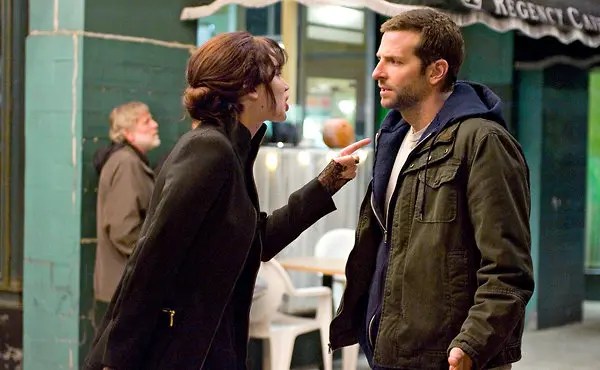
Just about the only film I can stand with a presentation of a bipolar character is Silver Linings Playbook, which is actually a beautiful and compassionate look at the experiences of a man who has lived with this condition for a long time, who rebuilds his life and finds stability and meaning again after a long hospitalisation. It’s truthful and empathetic, and actually takes into account his lived experience in a way that is reminiscient of Dr Gabor Maté’s work on the close relationship between trauma, Western culture and illness.
It’s a profoundly lonely experience, living this life with a serious psychiatric diagnosis. I am acutely aware that I have to ‘make up’ for the fact that I’m mentally ill by presenting as more stable than everyone else if I want to be taken seriously – I have to overcorrect all the time. Still, I am frequently (although often subtly) accused of hysteria, of irrationality, and the infantilisation is real. My decisions are so often questioned, my autonomy not respected, and I literally can’t tell you how many times I’ve been asked ‘have you taken your medication?’ It’s clear to see how mentally ill people are systemically mistreated, stigmatised and scapegoated, even by those closest to them; when your illness presents in your behaviour, you become extremely easy to undermine and dehumanise.
Further reading
https://www.apa.org/monitor/2021/04/ce-mental-illness
https://www.law.virginia.edu/macarthur-violence-risk-assessment-study
 The Station
Leave a comment