All the way through my pregnancy, I feared the dreaded c-section.
The thought of having seven (!) layers of tissue severed by somebody’s scalpel, all whilst wide awake, made my knees give way slightly.
I was offered an elective section at about 30 weeks, as it happens, by my NHS consultant. She had a look at my baby, held safe as he was at the time by my ever-expanding body, and at his previous scans, and acknowledged with a smile that he was going to be a big boy. She then turned to me and said, ‘shall we book you in for an elective section then?’ Phrases like ‘shoulder dystocia’ and ‘episiotomy’ and ‘risk of tearing’ echoed round the room as I struggled to take in how suddenly the rug was pulled from under me. I had hoped for a water birth.
Luckily for me, my best friend is a midwife, and I had brought her with me to this appointment. She advocated for me beautifully in that moment. As my best friend, she knew I was afraid. As a midwife, she knew better than me what my body was capable of. So, we talked about my options, and eventually we all came to the conclusion that an induction at 38 weeks would be better for me.
I remember ringing my sister shortly afterwards. She had also had a baby the year before, and had very strong negative feelings about inductions. Her birth sounded nothing short of traumatic and ultimately ended in a C-section after a lot of interventions. She heavily discouraged me from taking the induction, and I said I would consider what she had said, along with her experience.
Then came week 36. I woke up in the night with chest pain that wouldn’t subside. I drove myself to the local A+E and, lo and behold, my blood pressure was extremely high. I was quickly given medication and then told to drive to the Maternity Assessment Centre in the next town, with my cannula still in my hand.
By the time I reached the MAC, my blood pressure had fallen to a relatively acceptable level and there wasn’t much protein in my urine. I tried to explain that I had been given medication for the blood pressure, but that I was not really listened to, and I was quickly sent away.
Less than a week later, I drove back to the MAC with pain under my ribs and a blinding headache. Predictably, my blood pressure was sky high and there was protein in my urine. This was how pre-eclampsia presented in me – a potentially deadly condition in which the blood flow in the placenta is reduced. There was talk that evening of inducing me there and then, and they admitted me overnight whilst they monitored me and decided what to do. Thankfully, my blood pressure came down with tablets and we were able to stick to the original plan.
Week 38 came and went. I was so torn between my intense physical discomfort and desire to meet my son, and the desire to ‘keep him in’ as long as possible. On the Monday I was booked in for, there was no room on the induction ward. I was told to call back the next day. This went on until the Thursday, by which point I was starting to lose my grip on my sanity, when they finally called and invited me in for induction.
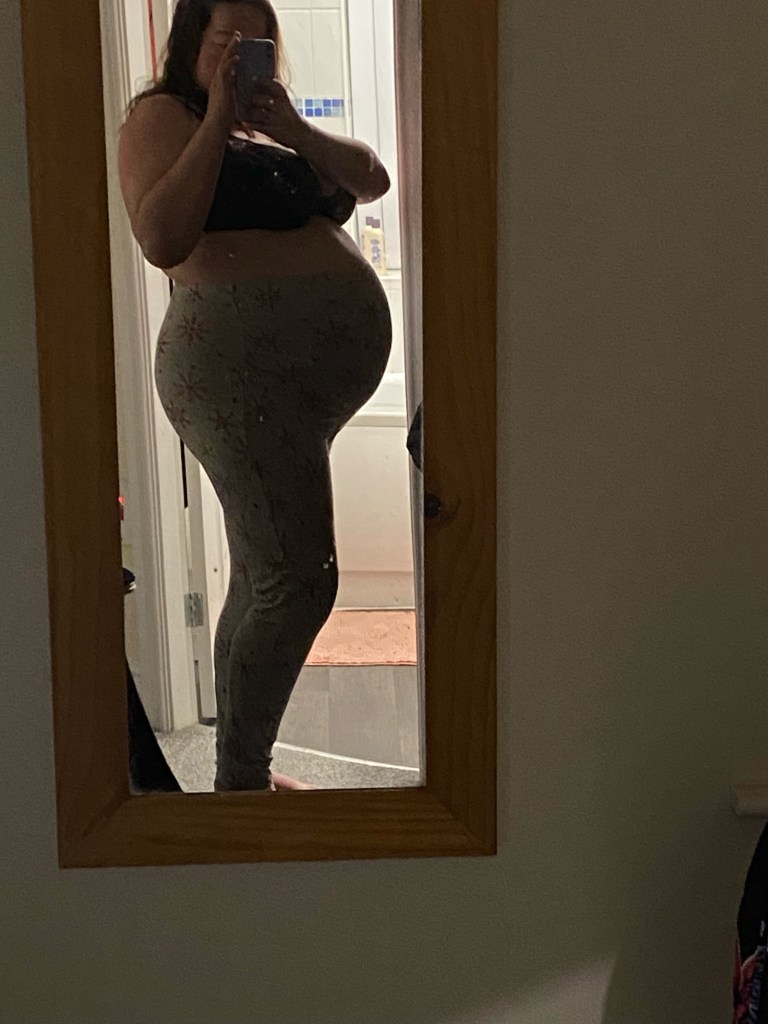
For some unknown, unknowable reason, a midwife came in, felt my stomach briefly and informed me that my son was breech and I would need a c-section. I protested – he had been scanned not two weeks previous and had been cephalic (head down) – but she would not hear reason and sent me for another scan to confirm or deny her strange hypothesis. 12 hours later, at nearly midnight, I was scanned and reassured that he was not breech, and the induction began.
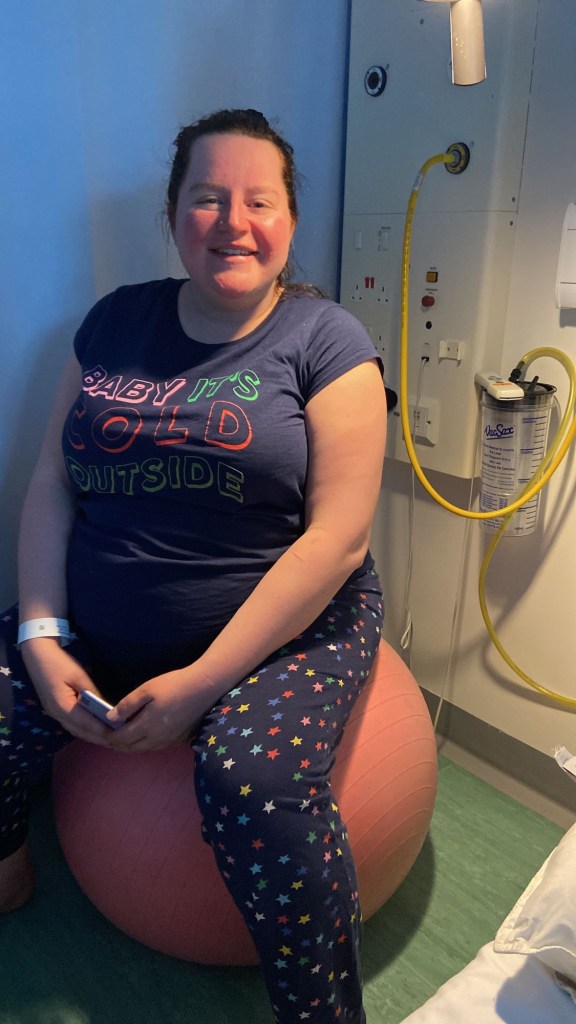
It was a brutal couple of days. From Thursday evening to Saturday afternoon, I showed little progression but experienced a lot of pain and discomfort as my body struggled to react to the hormones. Looking back, the signs were all there that this was going to be an unsuccessful induction – my cervix was nearly completely closed on the day it began, I had experienced no contractions or even Braxton Hicks, no mucus plug had appeared… there was just no sign whatsoever that my body was readying for birth at that point. I think, if left to my own devices, I would’ve still been pregnant three weeks later.
However, against all odds, at 3:15pm on the Saturday afternoon, as I was waiting to have my waters broken, they suddenly went naturally. I was lying down and remember feeling a trickling sensation. I asked my son’s father to help me up and said, ‘either I’m wetting myself or my waters are breaking.’ He looked a bit terrified, but helped me up, and as I stood I was suddenly flooded. I have never experienced anything like it – it was everywhere, pouring out of me uncontrollably and it did not stop! It was such a film moment.
This was the start of nearly 32 hours of labour, 12 of which were spent unmedicated on the induction ward as there was no space on labour ward. I was having regular contractions about five to six minutes apart, and remember, I had already been on the induction ward for two days. I went into the experience of active labour already drained. I was also positive for Group Strep B and should have been immediately treated with antibiotics upon my waters breaking, but that simply didn’t happen. The midwives were strangely dismissive of my plight; they offered me some paracetamol and basically left me to it.
Eventually, at about 3am the next morning, I was walked down to the labour ward (they didn’t have any available wheelchairs), which was incredibly uncomfortable because I was literally in my twelfth hour of labour, carrying one of my bags and still dripping amniotic fluid. How dignified.
When we arrived at the labour ward and I was shown to my room, we were instantly visited by a doctor who calmly told me that he was going to hook me up to an oxytocin drip to ‘hurry things up’. I asked if this would increase the pain; he shrugged and said ‘the contractions will become stronger.’ Then, he left and I never saw him again.
The next few hours were absolutely diabolical. I had been managing the ebbs and flows of natural contractions with my breathing and a touch of paracetamol, but I was glad to finally have access to gas and air. As they cranked up that oxytocin drip every half hour, the contractions went from rising and falling to just hitting me like a ton of bricks for about 1.5-2 minutes, before dying away. I remember begging the midwife not to adjust the drip several times.
I think the peak of awfulness hit when the head midwife and about five other people came in to do ward rounds, and I was bent over the bed, facing the door, panting and crying, with my hospital gown open at the back displaying my nakedness to everyone. My dignity was not protected or preserved in any way – nobody helped me to cover up, nobody asked the six random people who barged in to wait outside a minute whilst I got back on the bed, nothing. I was just another number. It was absolutely mortifying, and it was this plus the fact that I was exhausted that prompted me to ask for an epidural.
Shortly after I made that request (by this point it was about 11:30am), we were visited by the rudest anaesthetist of all time. He had the sheer audacity to tell me, a woman who had been in labour for nearly 20 hours at this point, that I wasn’t ‘managing the pain properly’. I hit the roof, and, I think, understandably so. Anyway, he finally stopped talking, gave me my much-needed epidural and left me alone.
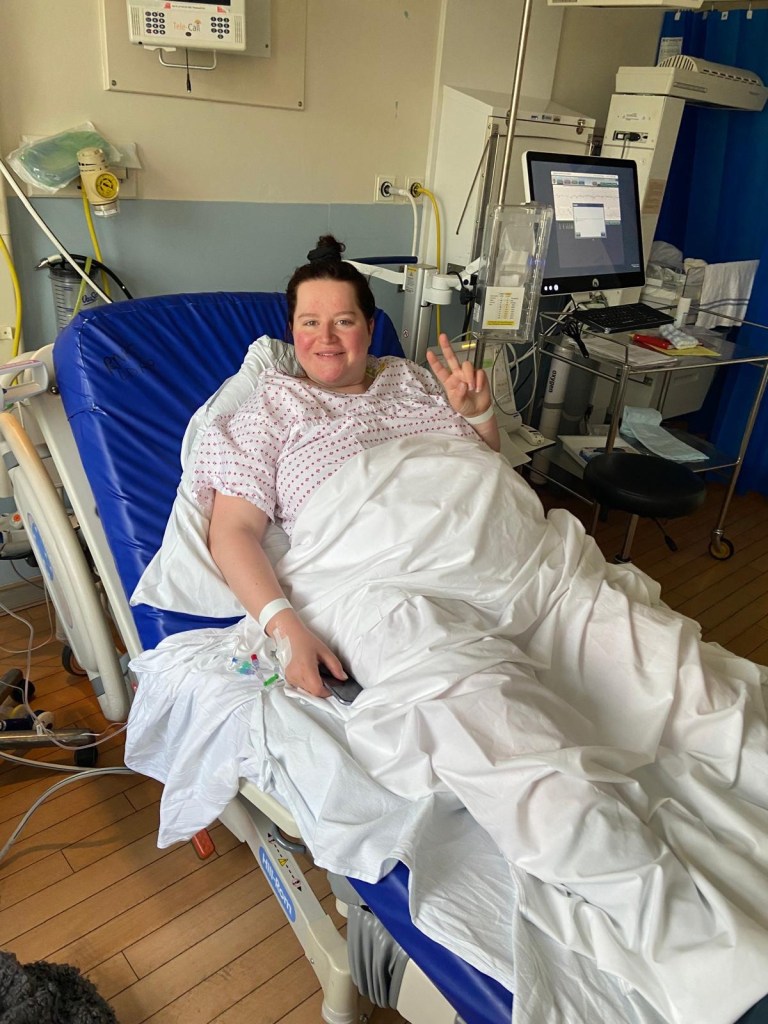
I think all of this was just a perfect storm. The epidural seemed to slow down my progression – I was at 7cm – and I was just too physically exhausted to even contemplate actually giving birth at this point. I fell asleep for about an hour, only to be woken up by my midwife, who informed me that my baby was starting to exhibit signs of distress. Understandable – he’d been going through this with me for the last few days. No wonder he was distressed. I was then informed that I was going to be taken to theatre for an emergency c-section – category 2, which meant within the next 45 minutes. I was devastated to lose my chance at a vaginal birth, and so frightened, but as my son’s father got into his scrubs, I actually managed to calm myself down. Only 45 minutes to wait until I met my son, right?
Wrong.
Eight hours later, I still hadn’t been taken down to theatre. When I requested an update, the midwife guilt-tripped me. ‘There’s a very poorly lady in theatre!’ she said. ‘You need to wait patiently!’ That would’ve been fine, but nobody had spoken to us in eight hours. Me and my son’s father had sat alone in that room for all that time, waiting.
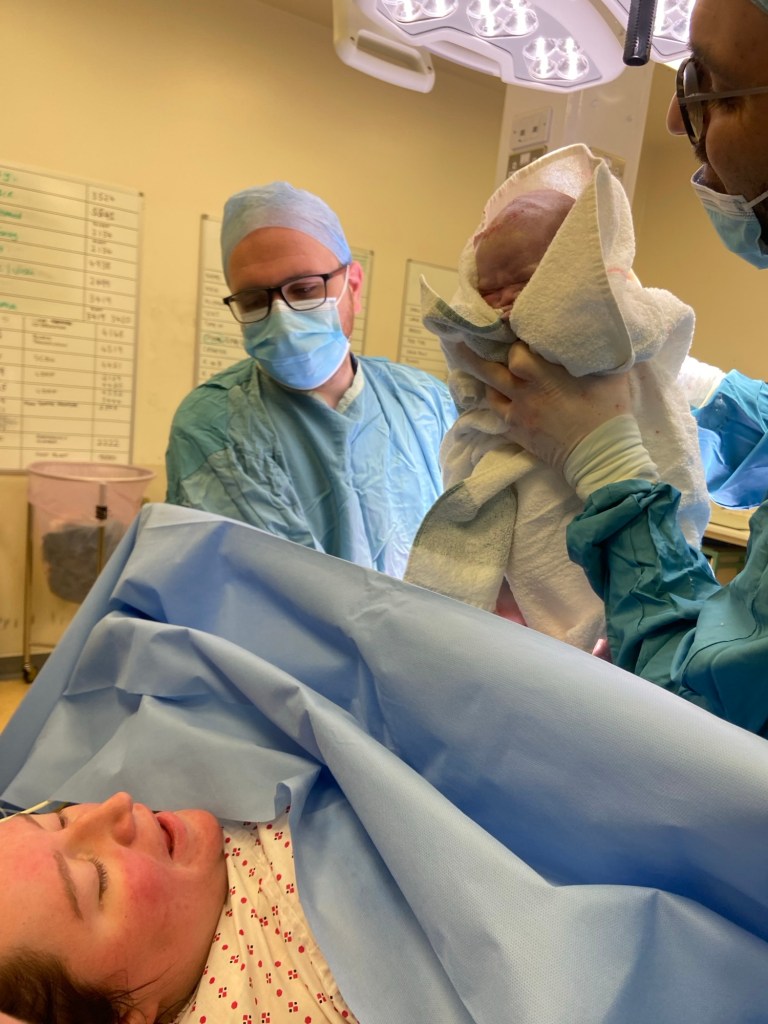
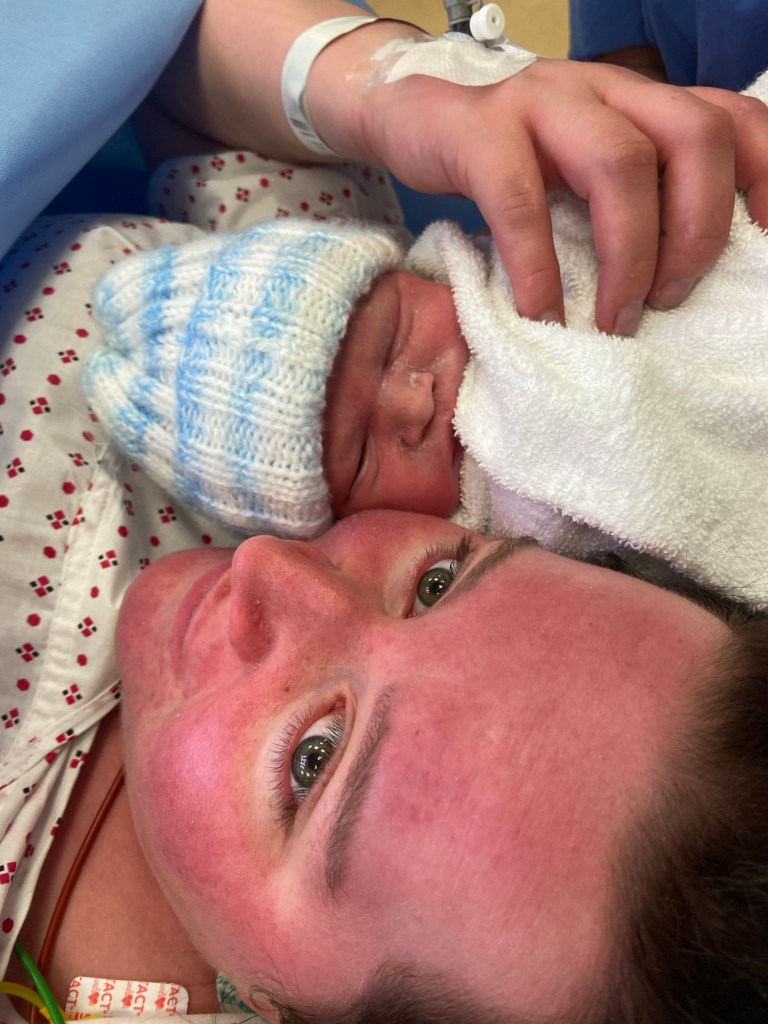
Finally, at 11:15pm on the Sunday evening, I was wheeled down to theatre. It was the scariest journey of my life; I cried as I was pushed in my bed down all those corridors. But honestly, the c-section was the best part of the frankly shambolic experience. The midwife was lovely and helped me to put on some music. The anaesthetist stroked my hair and reassured me as I cried with fear, and told me with a giggle that the operation was actually already underway and I hadn’t felt a thing! My son’s father held my hand throughout – he hadn’t left the hospital in days and must have been absolutely exhausted, too. The surgeons lifted my baby like Simba to show me and congratulated me the minute he was born. It was absolutely magical.
I think my experience, however, illustrates a larger trend within maternal healthcare really well. 42% of births in the UK last year were c-sections, with half of those being emergency c-sections. This statistic has steadily risen in the last few years. Some of the reasons given for that are an increase in complex births, possibly due to older mothers and higher rates of obesity. I was considered complex too and my care was consultant-led, due to my autoimmune hypothyroidism and serious mental health diagnosis. But if you’ve read my experience, you will perhaps come to the same conclusion that I came to when I thought it over; at no point was my body allowed to just do what it needed to do, and my state of mind was not taken into account at all. There is seemingly a total lack of acknowledgement of the mind-body connection within the NHS. I knew this already from personal experience; I was diagnosed with bipolar disorder at 22 and was doped up on antipsychotics for over a decade, without a single medical professional asking me what happened to you? I wasn’t born with bipolar disorder – I collected it along the way. Anyone who has engaged with any of Dr Gabor Maté’s work (The Myth of Normal, in particular) will know that there is increasing clinical evidence that the body remembers trauma, and it expresses itself as maladaptive coping mechanisms, mental illness and even autoimmune conditions, in which the body attacks itself. When I went into hospital on that bright April morning to be induced, they, probably inadvertently, treated me as an incubator, rather than a complete human being who knew on a cellular level how to birth my baby. That knowledge is innate and primal, and my voice was not heard.
I’m not saying there is no place for interventions such as induction and caesarean section – birth is a dangerous process and modern medicine has really reduced our risk of fatality. The ‘normal birth’ ideology is reductive and damaging in and of itself. But it can’t be denied that at several points during my four day ordeal, I was met with medical professionals who did not treat birth as a sacred process, and did not care to behave in a way that allowed me to keep my stress levels and fear as low as possible. My cortisol will have been elevated, my muscles tense, heart racing.
Maternity care in England as a whole is under intense scrutiny. The health regulator, the CQC, has reported that nearly half of England’s maternity units are rated at either ‘requires improvement’ or ‘inadequate’. There have been several high-profile investigations into failings at multiple trusts across the country. Staffing shortages are common. And I can’t help but think that this is also because childbirth is ultimately the domain of cis women. There is, I think, a heavy dose of systemic misogyny to be seen in allowing maternity care in a developed country such as England to become so demonstrably dangerous. Why should we dice with death in 2025 in order to experience the divinity of childbirth? If the men who run our country were the ones expected to undertake this hugely demanding physical feat, I am absolutely certain that maternity care would be immaculate.
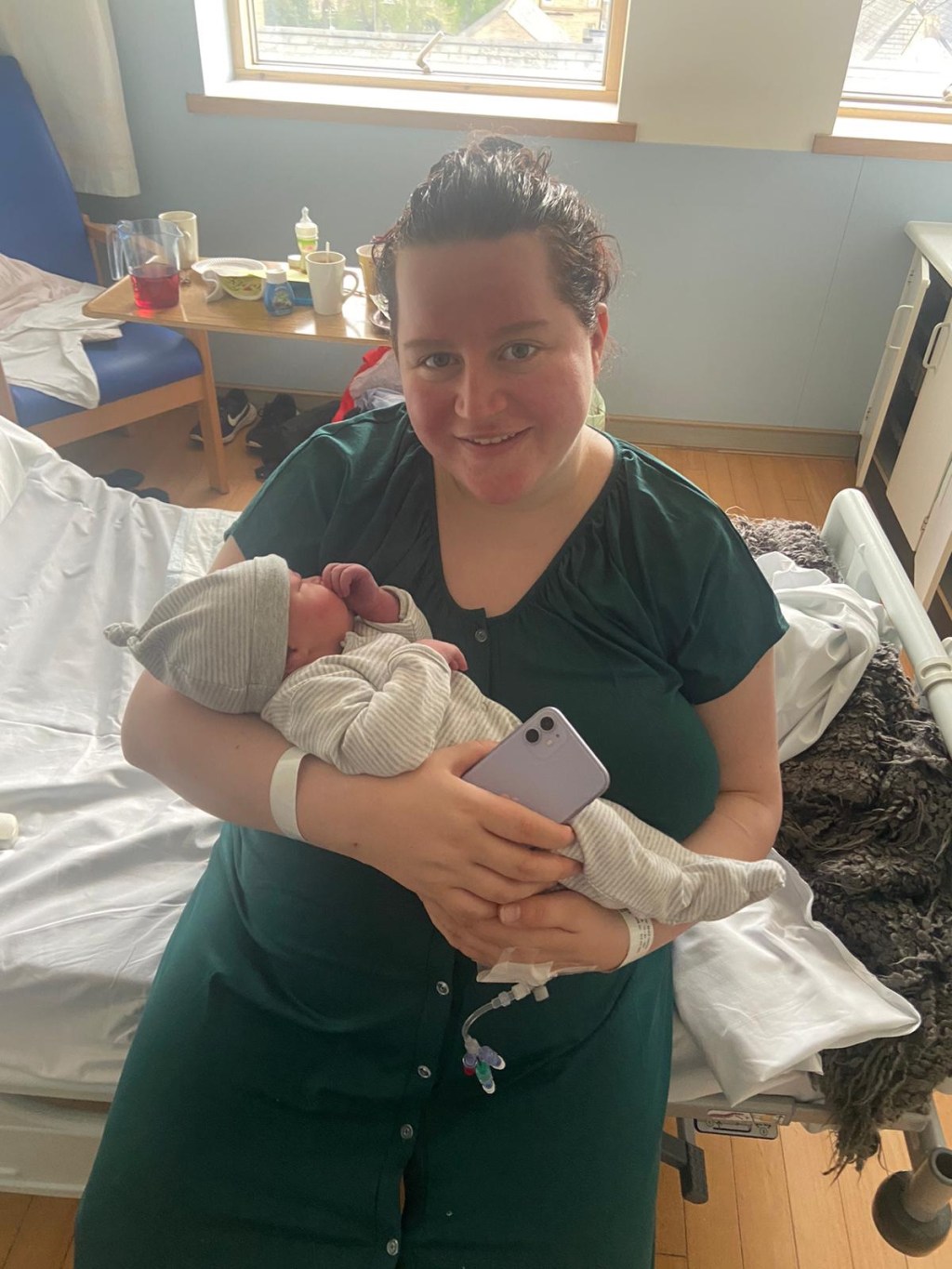
I came out of it with a beautiful baby boy, and most people’s response to my story is ‘well, you got your son out of it!’ Even women say this to me. And yes, I did. But don’t dismiss my sadly very common experience – I am a person, not just a mother. I also gained a largely unnecessary dose of medical trauma, a big scar, and this strangely uncomfortable feeling that my voice went completely unheard in the most vulnerable yet primal moments of my life.
 The Station
Leave a comment